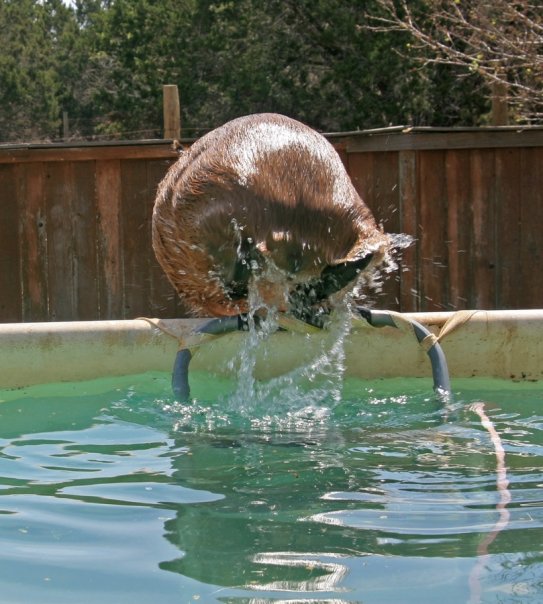
What I Am Not: Peccary / Javelina

The wide variety of animals that I can be confused with is a constant source of amazement to me. How could you humans mistake a cute animal like a capybara with some of these–let’s call them visually challenged–animals? I don’t get it. Nevertheless, it does happen and I am here to set the record straight. I am NOT a peccary or javelina or skunk hog or whatever other name you want to call these animals.

Collared peccary in Venezuela

Collared peccary in Venezuela

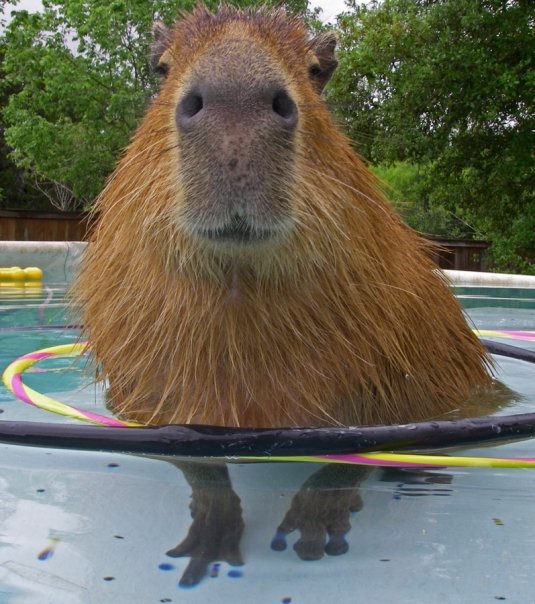
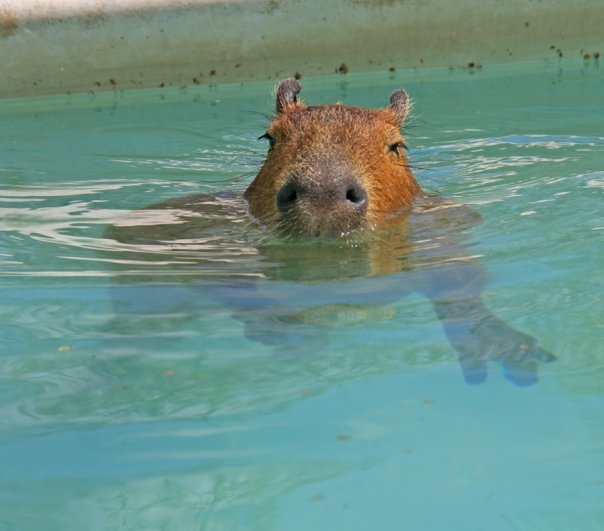
I’m not saying peccaries aren’t cute. They have a certain charm about them. But look at that nose! Now look at the photo of my nose.

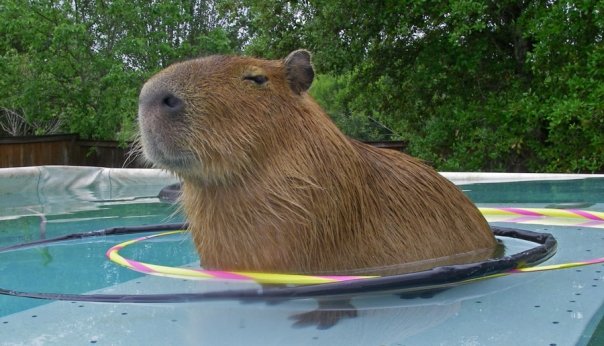
Adorable capybara profile including nose

My profile including my adorable nose

Do they look anything alike? No.

Here are some other ways we are different:

  • Peccaries have hooves (they are in the group with even-toed hoofed animals), capybaras have webbed feet.
  • Peccaries are omnivores, capybaras are herbivores
  • Peccaries have tusks, capybaras have self-sharpening incisors
  • Peccaries live from the American Southwest, through Central America and South America, capybaras are restricted to southern Panama and eastern South America.
  • Peccaries top out at around 90 lbs, that would be a puny capybara
  • Groups of peccaries sometimes attack and kill humans, capybaras are sweet, docile animals
  • Peccaries have an unpleasant odor from a scent gland on their back, capybaras have a nose scent gland whose odor is not noticeable by humans
  • Peccaries can run up to 20 mph, no one bothers to clock capybaras because we are so slow
  • Peccaries live up to 24 years, capybaras, sadly, live only 12-14 years

Here are some ways we are similar:

  • Our overall body shape is long and narrow
  • We overlap through much of our South American ranges
  • We both have very coarse hair
  • We are about the same length and height even though capys weigh more
  • We both have small ears (although capy ears are much cuter)
  • Jaguars, crocodiles and caiman will eat capybars or peccaries

I hope that clears up any confusion you have had on this topic. Do not feel too badly, lots of people make this mistake. But look again at the nose on that peccary and my nose. Seriously, don’t confuse us again.

What I Am Not: Tapir

You would be surprised how many people do not even know what a capybara is. They have never even dreamed of our existence. This is so sad, especially because we are probably the cutest animals on earth. I’m not bragging, just stating the facts.

So I decided to start a new series: Animals I Am Not.

This series will address some of the many, many types of animals I have been misidentified as. Today’s entry is the tapir, possibly the #1 animal I am incorrectly accused of being.

Sarah Cooper provided this photo taken at the Twycross Zoo

Sarah Cooper provided this photo taken at the Twycross Zoo

I think you can see that we do not look at all alike.

Here are some of the ways we are different:

  • Capybaras are rodents, Tapirs are ungulates
    Tapirs are more closely related to horses than they are to capybaras.
  • Tapirs are much bigger than capybaras
    Tapirs are 7′ long and 3′ at the shoulder. Capybaras are 4′ long and 2′ at the shoulder.
    Tapirs weigh 300-700 lbs, Capys weigh 75 – 150 lbs
  • Tapirs have a proboscis, a long snout, whereas capybaras have a beautifully blunt nose
  • Tapirs have a very short tail, capybaras have virtually no tail (just a little nub)
  • There are four species of tapirs and only two species of capybaras
  • Baby tapirs are striped, baby capys are colored pretty much like adults
  • Spellcheckers know the word tapir but do not know capybara (I’m tired of that red underline!)
  • Tapirs are browsers whereas capybaras are grazers

Here are some of the ways we are similar:

  • We both have long, narrow bodies often described as “pig-like”
  • Our hind feet have three toes and our forefeet have four toes
  • Some tapirs live in South America right alongside capybaras
  • Tapirs and capybaras both like water
  • Tapirs and capybaras are both herbivores
  • Jaguars and crocodiles will eat either a tapir or a capybara
  • Tapirs and capybaras both like mud

I hope you have found this helpful. Don’t be ashamed if you have made this mistake yourself, just consider yourself lucky that you now know about the most wonderous animal in the world, the capybara!